Lecture: Ben Miller – “What remains is the rest of life”
On Jürgen Baldiga and the danger of a single story of HIV/AIDS art
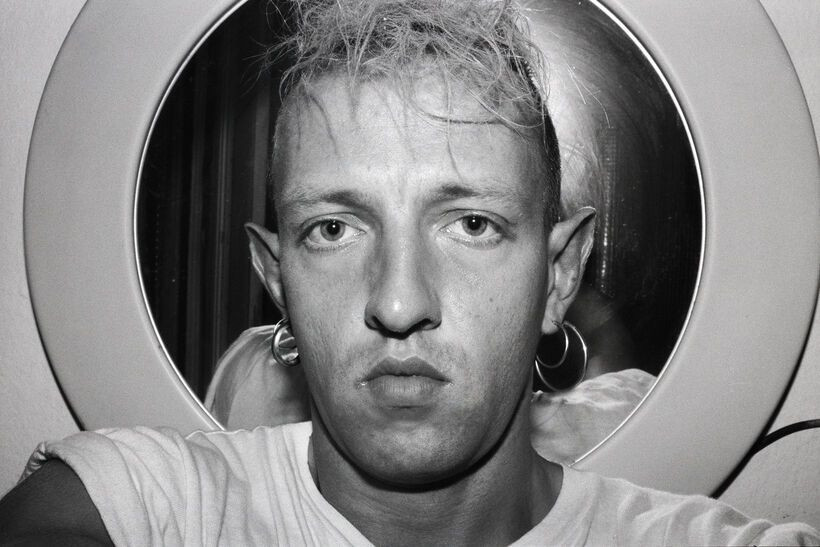
selfportrait © Jürgen Baldiga
Language accessibility: English
The lecture follows the screening of Jasco Viefhues' film Rescue the Fire.
Free entry
There is a queer desire for history. Young queer people are desperately seeking stories of their (I think I’ve passed the age where I can say our) ancestors. Given the unfolding global crises amidst which we live, it is unsurprising that many are particularly interested in the story of the HIV and AIDS epidemic. Overly simplistic narratives are legion. One of the crucial truths about the activism and artistic production around the HIV/AIDS crisis has been its polyvalence. This essay explores the photography of Jürgen Baldiga as a queer response to the catastrophe. Baldiga’s photographs are queer not in the sense of being about the self that is at odds with everything around it and that has to invent and create and find a place to speak and to thrive and to live (though that is a part of it), but queer as in unapologetic celebrations of the sex and gender deviance that has, past and present, gotten us persecuted, jailed, and murdered.
Film screening: Jasco Viefhues – Rettet das Feuer (Rescue the Fire)
Ben Miller is a writer and historian living in Berlin. In 2024 he completed a PhD in global intellectual history summa cum laude at the Freie Universität. His dissertation, forthcoming as an academic monograph, is a history of race and primitivism in the rise of gay liberation, and it was awarded the Tiburtius Prize for the best dissertation in any subject at any university in Berlin. With Huw Lemmey, he hosts Bad Gays, a podcast about evil and complicated queer figures in history, which has been downloaded nearly two million times. A book based on the show was published by Verso in 2022; titled Bad Gays: A Homosexual History, it passionately argues for a more complex and political queer public history. The book received rave reviews in the Washington Post and the Los Angeles Review of Books, among others, and it has been translated into Italian, Spanish (in progress) and Thai (in progress). Miller’s next book, a biography of the fashion designer Rudi Gernreich that doubles as a history of how the politics of liberation traveled from the European interwar avant-garde to 1960s California, is currently under contract with W. W. Norton.
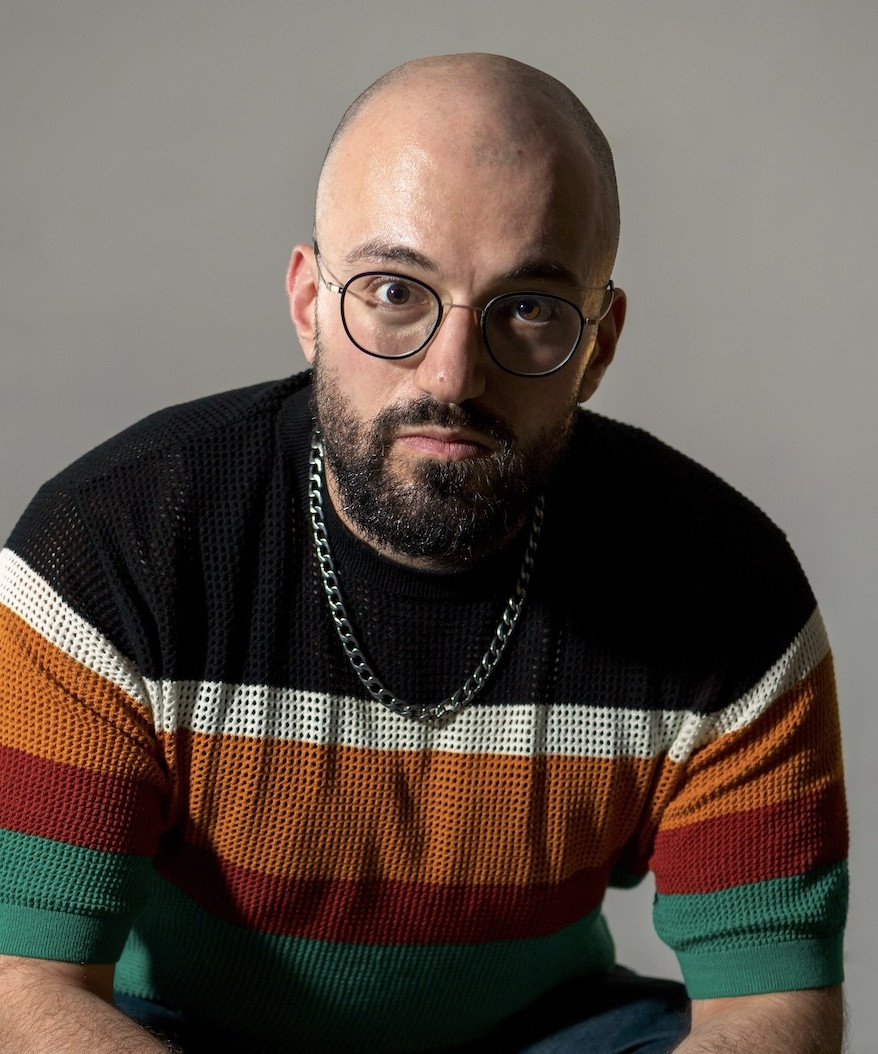
Ben Miller © Sergio Andretti
Committed to public history and to collaborative, interdisciplinary, artistic, and community-based research, Miller has taught at the Freie Universität, the Berlin Writer’s Workshop, NYU Berlin, and Humboldt Universität. He has received long-term research stipendia from the Deutscher Akademischer Auschtauschdienst and the Deutsche Forschungsgemeinschaft and been published in Radical History Review. He is a coeditor of a forthcoming issue of Global Intellectual History. He has been a guest expert and documentary narrator for Netflix (Eldorado: Everything The Nazis Hate, 2023) and given public talks at, written catalogue essays for, and collaborated on public history projects with institutions including the Munich Documentation Center for the History of National Socialism, the Toronto Biennial of Art (with AA Bronson), K21 Düsseldorf, the ONE National Gay and Lesbian Archives, the Museum of Art and Design Hamburg, Kunstinstituut Melly, Volksbühne Berlin, the Rotterdam Philharmonic Orchestra, and the Universities of Oxford and Cambridge.
Since 2018 he has been a member of the board of the Schwules Museum, the world’s largest independent institution devoted to archiving and preserving LGBTQI* histories and visual culture. A regular contributor to outlets like The New York Times, London Review of Books, Financial Times, The Baffler, and more, Miller’s writing has also been included in anthologies such as A Queer Anthology of Healing (Pilot Press, 2020) and Les Tasses: Toilettes publiques, Affaires privées, which won the 2020 Sade Prize. He is the author of Time Is A Queer Thing (Media Guru Editions) and New Queer Photography (Verlag Kettler, 2020). He is represented by Doug Young at PEW Literary in London.